- Cover: NCDEQ Finds PFAS in Landfill Groundwater
- Director’s Report: BREDL Has Its Day in SC’S Highest Court
- Essay: Data Centers on the Horizon
- New Controversy Surrounding Mountain Valley Pipeline
- How Does Pollution Impact Our Wildlife?


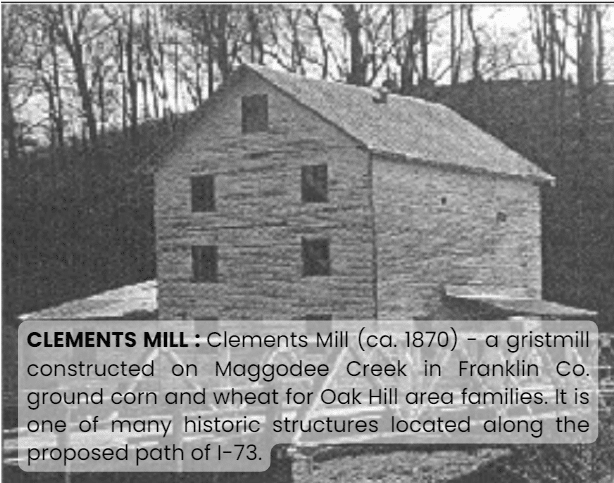 On September 17, the Virginia Commonwealth Transportation Board voted unanimously to rescind their May, 2001 approval of the I-73 corridor location. This vote is a victory for BREDL’s chapter, Virginians for Appropriate Roads, which was formed in 1999 and worked actively to prevent construction of I-73 for over a decade.
In 1998, a number of local citizen groups began organizing against I-73 – groups such as Citizens Concerned about I-73 and Friends of Franklin County (both based in Franklin County), the I-73 Regional Impact Network and Virginia Action for Sustainable Transportation (both in Roanoke County), Blue Ridge Concerned Citizens (Botetourt County), and Gainsboro Neighborhood Alliance, Riverland Alert Neighbors, and National Network for No New Highways (all in City of Roanoke). These groups began communicating with local, state, and federal elected officials, learning about the process involved in approving I-73, investigating legal options, communicating with our neighbors, and taking first steps to develop a consensus about what we should be doing to stop I-73.
One of the major discoveries during this period was of a technique called access management (www.accessmanagement.info) being developed and promoted by Federal Highway Administration and Virginia Department of Transportation (VDOT) as an effective tool for improving the safety and traffic carrying capacity of older roads like U.S. 220 without having to build new highways to replace them. VAR was never able to get VDOT or FHWA to talk with us about putting access management on U.S. 220 as an alternative to building I-73 through our region’s mountains, forests, and farmland.
In 1999 VAR became a chapter of Blue Ridge Environmental Defense League (BREDL), conferring 501(c)3 nonprofit status, so that all donations made to VAR would be fully tax deductible. The same year, I-73 was featured in Road to Ruin, a publication by Friends of the Earth and Taxpayers for Common sense, naming I-73 as one of the nation’s 20 most destructive highway projects. VAR also began working with a nationally-recognized historic preservation attorney named Andrea Ferster, who provided guidance on the legal significance of historic resources in the path of I-73. Andrea coached us step by step, week by week, year by year, for over a decade, in how to have standing in the issues of National Environmental Policy Act (NEPA) and in her area of expertise, the National Historic Preservation Act. For the first eight years or so, Andrea did not charge us a dime. It was not until we actually took Federal Highway Administration to court under NEPA that Andrea charged, and then it was a deeply discounted rate for the grassroots.
In 2000, VAR fought for and won status as a Consulting Party, which gave us special rights in the federally-mandated identification of historic properties in the path of I-73. The same year, VAR hired a historic preservation consultant, Harry Reem, who began coordinating the efforts of local historians in the City of Roanoke and Roanoke and Franklin Counties to research local history and identify historic resources in the path of I-73 that VDOT’s taxpayer-funded surveys did not find. Mr. Reem’s surveying, mapping and analysis were summarized in several thick reports on the properties’ potential eligibility for listing in the National Register of Historic Places, a designation that would trigger an added layer of federal protection for these buildings and neighborhoods. The effort to seek Consulting Party status and the hiring of Harry Reem were both pursued by VAR through the guidance, education, and support of our attorney, Andrea Ferster.
In October, 2002, the Keeper of the National Register of Historic Places agreed with Harry Reem’s assessment of the historic eligibility of an urban historic district, Southeast Roanoke, which was built during Roanoke’s heyday as an industrial center and maintains much of the original housing and road patterns from its period of historic significance, the early 20th century.
In a 60-page report dated July, 2003, VDOT requested that the Keeper of the National Register reverse her October, 2002 decision regarding Southeast Roanoke’s eligibility for inclusion in the National Register of Historic Places. VDOT’s report argued that a new, smaller historic district should replace the district that VAR identified through field surveys and research performed in 2002 by our historic preservation consultant, Harry Reem. VDOT’s proposal to “shrink” the Southeast Roanoke district would allow room for I-73 to be built along the Roanoke River between Riverland and Old Southeast communities in downtown Roanoke.
In Sept. 2003, Harry Reem submitted a detailed report to the Keeper of the National Register defending the eligibility of the Southeast Historic District. Federal law prohibits use of land from historic sites for construction of federally-funded highways such as I-73, and VAR’s identification of Southeast Roanoke as a historic district would force VDOT to reconsider their options for I-73’s routing through the City of Roanoke. So the stakes were very high.
In 2004 VAR’s historic preservation work paid off. The Southeast Roanoke Historic District identified by Harry Reem four years earlier was named eligible for listing in the National Register of Historic Places by the Keeper of the National Register. This historic designation forced FHWA to re-route I-73 to avoid Southeast Roanoke. The re-routing of I-73 onto the existing U.S. 220 corridor, combined with lack of funding for the project, undermined all momentum to build I-73.
A similar effort to identify historic significance for the Old German Baptist (“Dunkard”) dairy farming settlement in Franklin County fell through, however. The approved path for I-73 actually would have paved over the group’s outdoor baptismal site on the banks of Little Ellie Creek, where they’ve been baptizing since 1965. FHWA refused to allow VAR’s analysis of the historic significance of the German Baptist settlement, as prepared by Harry Reem, to be submitted to the Keeper of the National Register.
In February, 2006, The Franklin County Board of Supervisors voted unanimously in support of submitting a grant application to the Virginia Department of Transportation (VDOT) Rural Transportation Planning Grant program to obtain funding for a study of implementing access management on the county’s portion of the U.S. 220 corridor and other highway corridors in the county. The board’s action followed the county’s receipt last November of 75 postcards sent by Franklin County residents requesting that the supervisors apply for the VDOT funds.
VAR had formally requested that the County seek the access management study at the board’s December, 20, 2005 meeting, citing Franklin County’s “obligation to be a good steward of the 220 corridor, which is an important regional and multi-state transportation facility that should be maintained so that it continues to provide a reasonable level of service for Franklin and neighboring counties, even in the event that I-73 is built.”
In November, 2006, in response to the issuance of the Final Environmental Impact Statement (FEIS) for I-73, VAR provided comments of close to 400 pages which stated in precise detail what VAR considers omissions, errors, misstatements of fact and misleading information and arguments made in the FEIS. Comments focused on 13 major areas of concern which have been longstanding sources of contention with the I-73 project throughout its study history, including the impact on the Roanoke logperch (a federally listed endangered species), the threat to the German Baptist Oak Hill community, the failure to study a non-interstate option for building I-73, and the issues surrounding proposed Buck Mountain access to the Blue Ridge Parkway. In addition, comments addressed the manipulated public participation process, shortcomings of the economic impact analyses, the use of “Congressional intent” to prejudice the Purpose and Need, and the inadequacy of the project Re-Evaluation. Careful review of the Biological Assessment for the Roanoke logperch contained in FEIS Appendix E revealed substantive editing changes to the original research document, changes that support pre-determined outcomes regarding potential impacts on logperch populations in favor of the Approved Location Corridor. Also noted was VDOT’s failure to consider new assessment tools for evaluating road impacts to aquatic habitats recommend by US Fish and Wildlife Service, a cooperating agency.
Among the most persistent deficiencies cited and discussed throughout VAR comments was VDOT’s failure to study a U.S. 220 upgrade. Via ongoing communication with VDOT and FHWA, VAR consistently promoted an awareness of reasonable alternatives to building I-73 as an interstate freeway on new alignment, specifically a principal arterial design that would include access management features. VDOT and FHWA contended and stated in the FEIS that such a design concept actually mimics an interstate freeway design option (Option 3) and so does not merit further study. VAR comments include extensive review of communication and report information, as well as VDOT design standards, which clearly contradict the FEIS conclusion.
VAR comments to the FEIS provided a comprehensive and detailed account of VAR’s work to assure the I-73 project complied with the laws and regulations that are in place to benefit citizens and communities. To view them in entirety, please see: https://app.box.com/shared/4gqq3y8450
We also share VAR’s comments on I-73 impacts to the Blue Ridge Parkway: https://app.box.com/shared/hlbfeu3izr
In 2007, FHWA issued a Record of Decision (ROD) for I-73. The issuance of a ROD is FHWA’s statement that all the requirements have been met for environmental review for I-73 as stipulated in NEPA, Clean Water Act, Endangered Species Act, Section 106 of the National Historic Preservation Act, and Section 4(f) of the U.S. Department of Transportation Act. The ROD was FHWA’s way of saying that I-73 had met numerous legal hurdles and was eligible to receive federal funds for engineering studies, right-of-way acquisition, and construction.
VAR sued in 2007 in the Western District of Virginia on the basis of FHWA’s failure to consider the reasonable alternative of upgrading the existing highway, U.S. 220, using access management techniques, and other subjects. We were unceremoniously shot down in the Western District courtroom by Judge James Turk. This was the anticipated outcome, i.e., no surprise whatsoever. We filed an appeal (in his decision, Judge Turk had actually cut and pasted an error of law from FHWA’s legal document). In the course of our appeal, we were offered an out-of-court settlement. By that time – eight years after the peak of the public’s interest and involvement in I-73 – VAR accepted the settlement, which gives VAR standing to sue again if FHWA ever produces a Supplemental Environmental Impact Statement for the I-73 project.
In 2008 VAR, working with Citizens Concerned about I-73, successfully sought Franklin County’s approval to develop the Franklin County Access Management Guidebook with a grant from VDOT. This guidebook would prepare the county for the new paradigm that was about to descend upon local governments throughout Virginia with the General Assembly’s creation of new regulations requiring that access management be implemented on all primary and secondary roads statewide.
In 2020, BREDL’s Executive Assistant, Mark Barker, composed a letter to the CTB. This letter, based on years of research of funding for I-73, asked the CTB to rescind plans to build I-73 in Virginia. BREDL obtained signatures on the letter from twenty I-73 activists, many of them active in the I-73 fight since the mid-1990s. The letter as submitted to the CTB documents in dramatic detail the long-term lack of funding to build I-73 in Virginia and the need to remove the project from the state’s plans. The signed letter is available for viewing at: https://app.box.com/s/cm7sdqwuqd4mjtifuz507rc7nl7dkq6l.
A video of the Commonwealth Transportation Board vote on September 17 to rescind I-73, as well as a WDBJ-7 newsclip of BREDL staff and an I-73 activist providing comments on the CTB’s action can be viewed at: https://drive.google.com/drive/folders/1pFd5QHELfehzahPokzx3nDW_ByKKqEyP for
BREDL staff are planning a celebration event to which we will invite all the I-73 activists for whom we can find up-to-date contact information. Please let Ann Rogers know if you’d like to attend (email → amelvin3@verizon.net).
On August 1, 2024 North Carolina’s Division of Air Quality held a public hearing for Dominion Energy’s air permit application for the proposed Moriah Energy Center (MEC) in Person County, NC. The controversial MEC facility would initially be home to a 25 million liquified natural gas storage tank, with plans for a second 25 million gallon tank in the future.
When the hearing was announced in June, members of BREDL’s NoMEC chapter began to voice their displeasure with NCDEQ regarding the location of the hearing, which was two counties away from the location of the proposed facility. Numerous Person County residents and elected officials requested a change of venue, or an additional hearing, but those requests were ultimately denied. In response to NCDEQ’s denial, BREDL held an online “People’s Hearing” to coincide with the in-person hearing.
The in-person hearing at Vance-Granville Community College featured 39 speakers, 38 of whom asked DAQ to deny the permit. Speakers shared numerous concerns primarily focused on Dominion’s history of air quality violations and the need for onsite monitors.

Rev. Christopher Fair of Granville County, NC expressed concerns about safety and Dominion’s failure to notify nearby residents of their plans. “I live a thousand yards east of the Person County line, however, I don’t think that gas and pollutants honor county lines. Yet, we were not even warned about this. I had to have a fellow pastor tell me that this was happening 3 miles from my house.”
Fair, who holds a master’s degree in Weapons Systems Engineering said that he assessed the site as an equivalent to 54 tons of TNT. Said Fair, “I see no studies, no emergency response plans. I see a lot of estimates of pollutants, but nothing reliable. They have other plants, so why can’t they give us numbers from those? I had to go through a massive groundwater study just to put in an 800-foot gravel driveway in Granville County because they were worried about the groundwater. They’ve done nothing here.”
Jeff Hammerquist, who lives on property that sits directly adjacent to the site, said that he’s concerned about the future of his family’s farm and for his own health.
“I underwent open heart surgery for a genetic heart condition in October 2022 and I don’t have to call my cardiologist to know that I don’t need formaldehyde in my diet. The detrimental impacts of these hazardous air pollutants is well documented and agreed upon by scientists.” He went on, “If the Department of Environmental Quality does not care to say no to energy conglomerates taking from the environment for financial gain, then what exactly does this department exist to do?”
BREDL’s online hearing allowed 4 additional speakers to publicly voice their concerns to DAQ. BREDL Executive Director, Kathy Andrews questioned why the plant, which by Dominion’s own estimates will operate approximately 8 days per year, is being built in this location in the first place. “Why build a dangerous gas facility where people don’t want it? The only thing I can think of is greed. There is no desperate need for this plant.”
Bob Brauer, who lives in Person County but could not attend the in-person hearing, also spoke during the online People’s Hearing. He said, “Given the state of our climate situation, we really need to start to migrate away from fossil fuels. Unfortunately, the Moriah Energy Center is just another step towards continuing our dependency on fossil fuels, when we need to be moving away from that.”
BREDL Strategic Advisor, Lou Zeller, spoke about the flawed permitting regulations employed by agencies such as DEQ. He said, “Air permit regulations contemplate so-called ‘major sources’ and ‘minor sources’ depending on the volume of pollution emitted. Synthetic minor permits are loopholes created to avoid certain regulatory requirements. The permit, as drafted, cannot and does not protect air quality as it is required under the law. It’s like crossing your fingers when you make a promise.”
The majority of emissions at the facility would come from combustion sources including heaters, generators and flares. Dominion has applied for a synthetic minor permit, rather than the more stringent Title V permit, even though their own projections suggest that the facility will emit more than 65,000 tons of greenhouse gasses into the atmosphere each year. The facility would also allow tanker truck loading and unloading of liquid natural gas.

Residents of the communities surrounding the proposed site of the facility have been fighting the proposal since the project was publicly announced in late August, 2023. In February of this year, several residents living closest to the facility filed a lawsuit against the Person County Commissioners, opposing the rezoning of more than 450 acres of land from “rural conservation”, to “general industrial”. As of now, the rezoning remains paused due to this litigation. Even if the air permit application is approved, the company will not be able to build the facility until the zoning issue is resolved.
Video of BREDL’s online hearing was submitted to the Division of Air Quality on August 2, as a part of the public comment process. For more information on NoMEC’s fight against Dominion Energy, please visit www.NoMEC.org.
The North Carolina Division of Air Quality has scheduled a public hearing for Dominion Energy’s air permit application for the proposed Moriah Energy Center (MEC) in Person County, NC. The controversial MEC facility would initially be home to a 25 million liquified natural gas storage tank, with plans for a second 25 million gallon tank in the future.
Residents of the communities surrounding the proposed site of the facility have been fighting the proposal since the project was publicly announced in late August, 2023. In February of this year, several residents living closest to the facility filed a lawsuit against the Person County Commissioners, opposing the rezoning of more than 450 acres of land from “rural conservation”, to “general industrial”. As of now, the rezoning remains paused due to this litigation.

One of the final hurdles for Dominion is the approval of their air permit application. The liquefaction process would separate heavy hydrocarbons from the natural gas stream before storage. The heavy hydrocarbon stream would either be routed back to the natural gas pipeline or burned off with flares. The majority of emissions at the facility would come from combustion sources including heaters, generators and flares. Dominion’s own projections suggest that the facility will emit more than 65,000 tons of greenhouse gasses into the atmosphere, each year. The facility would also allow tanker truck loading and unloading of liquid natural gas.
The air permitting hearing will be held on Wednesday, August 1, 2024 at Vance Granville Civic Center in Henderson, NC. Members of BREDL’s NoMEC chapter have voiced their displeasure with DEQ regarding the location of the hearing, which is two counties away from the location of the proposed facility. Numerous Person County residents have requested a change of venue, or an additional hearing. At this time, neither a change of venue, nor an additional hearing date has been announced.
NoMEC members are asking that DEQ deny Dominion’s air permit application, and that the facility be required to implement safety features that would reduce the threat of a significant leak and explosion. If you would like to submit a comment to the Division of Air Quality, please email DAQ.publiccomments@deq.nc.gov before August 2. Be sure to include ‘Moriah-Energy.23A’ in the subject line.
For more information on NoMEC’s fight against Dominion Energy, please visit www.NoMEC.org.