About CHOCE
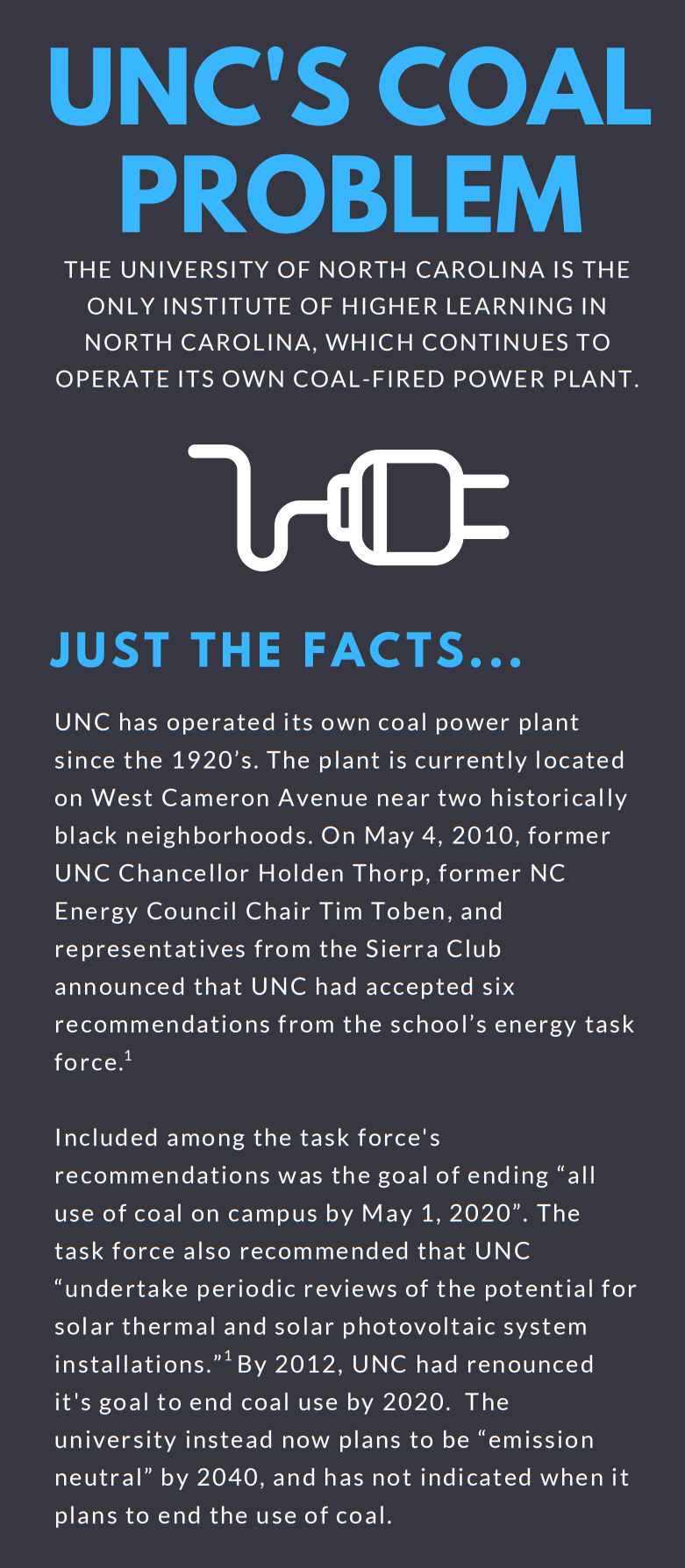
The University of North Carolina at Chapel Hill is the only institute of higher learning in the state of North Carolina, which continues to operate its own coal-fired power plant. North Carolina’s flagship university continues to use combustion power sources to generate power and heat for the university; even during these times of unprecedented urgency to reduce CO2 emissions. The Chapel Hill Organization for Clean Energy (CHOCE) exists to urge the university to move toward clean renewable energy.
 How the Plant Operates
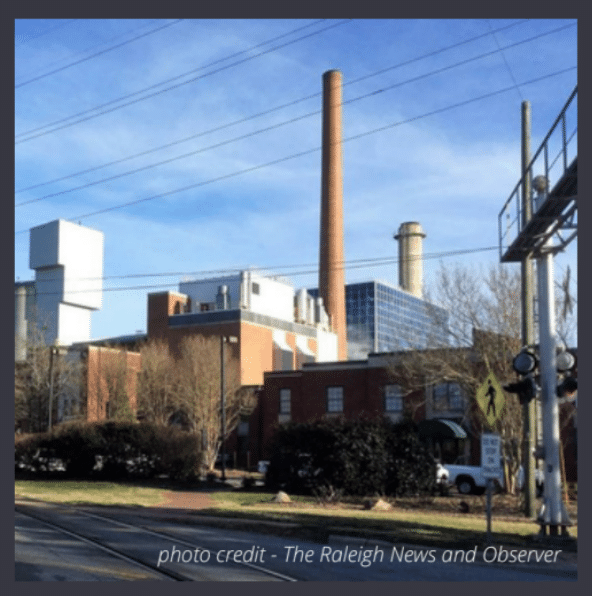
UNC’s coal plant is known as a combined heat and power system (CHP), or cogeneration facility. This type of facility uses a heat engine or other power source to generate both heat and electricity. These systems convert waste heat from electrical generation, into energy that can be used for heating and cooling. The heat engine for UNC’s cogeneration system comes from burning coal and natural gas. The primary purpose of UNC’s plant is to generate steam, which is used for heating, humidification, domestic hot water heating, sterilization and making distilled water. It also supplies a small portion of the campus’ electricity. The remainder comes from the Duke Energy grid.
Public Health Risks
Every step in the coal process – mining, transportation, washing, burning, and disposal of waste – impacts human health. In fact, coal pollutants contribute to 4 of the 5 leading causes of death in the United States: heart disease, cancer, stroke, and chronic lower respiratory diseases. Burning coal, in particular, releases carbon dioxide, sulfur dioxide, and nitrogen oxides. Coal plants also produce mercury and other heavy metals, known to cause neurological damage to humans. Other documented health risks from exposures to coal pollutants include premature deaths, low birth weights, higher risk of developmental and behavioral disorders in infants and children, and higher infant mortality. Recent research has also indicated a statistical link between coal plants and suicide rates.
What Can You Do?
 While many of the nation’s largest utility companies, including Duke Energy, have implemented plans to end their use of coal in the near future, UNC-Chapel Hill currently has not publicly indicated a specific plan to do so. Here’s what you can do to change that:
- Join community groups, such as the Chapel Hill Organization for Clean Energy (CHOCE), who are working to end the use of coal at UNC.
- Keep a record of your personal experiences living near a coal plant, and share those experiences with your neighbors.
- Contact elected officials to express your concerns regarding UNC’s use of coal.
- Encourage your friends and neighbors to join us in urging UNC to move away from coal and
towards renewable energy.
LIKE OUR FACEBOOK PAGE!
CHAPELHILLCHOCE@GMAIL.COM
(336) 439-5660